
Strategic Growth & Optimization
You have infrastructure but lack strategy
Businesses that invested in tracking, data systems, and automation often hit a new bottleneck - they have the tools but lack the strategic expertise to use them effectively. Data sits in dashboards but nobody knows what to optimize next. Ad spend gets allocated by gut feel instead of marginal ROAS analysis. Tests happen randomly without frameworks. Creative refreshes are reactive, not proactive. The infrastructure works, but growth plateaus because systematic optimization and strategic decision-making are missing.
Where optimization falls short
- Teams optimize what's easy, not what matters: Changing button colors and headline variations is straightforward, so that's where testing effort goes. Meanwhile high-impact strategic questions - which audience segments to prioritize, whether to expand to new channels, how to structure offers, when to shift budget allocation - don't get answered because they require deeper analysis and strategic thinking.
- Budget allocation happens by inertia: Last month's budget becomes this month's default. Channels that performed well six months ago keep getting funded even as performance degrades. New opportunities get ignored because "that's not how we've done it." Reallocation requires proving a negative (opportunity cost of current allocation) which is harder than maintaining status quo, so money stays misallocated.
- Testing lacks strategic prioritization: Teams test random ideas as they come up - someone suggests trying video ads, another wants to test new landing page layout, marketing sees competitors doing something and copies it. No framework for estimating potential impact or prioritizing based on effort vs expected value. Low-leverage tests consume resources while high-impact opportunities sit unexplored.
- Performance analysis is backward-looking reporting: Monthly reports show what happened - revenue was up 12%, this channel performed well, that campaign underperformed - but never answer "why did this happen?" or "what should we do about it?" Dashboards generate data but not insights. Teams know the numbers but lack strategic recommendations for what to change.
Systematic strategy that compounds
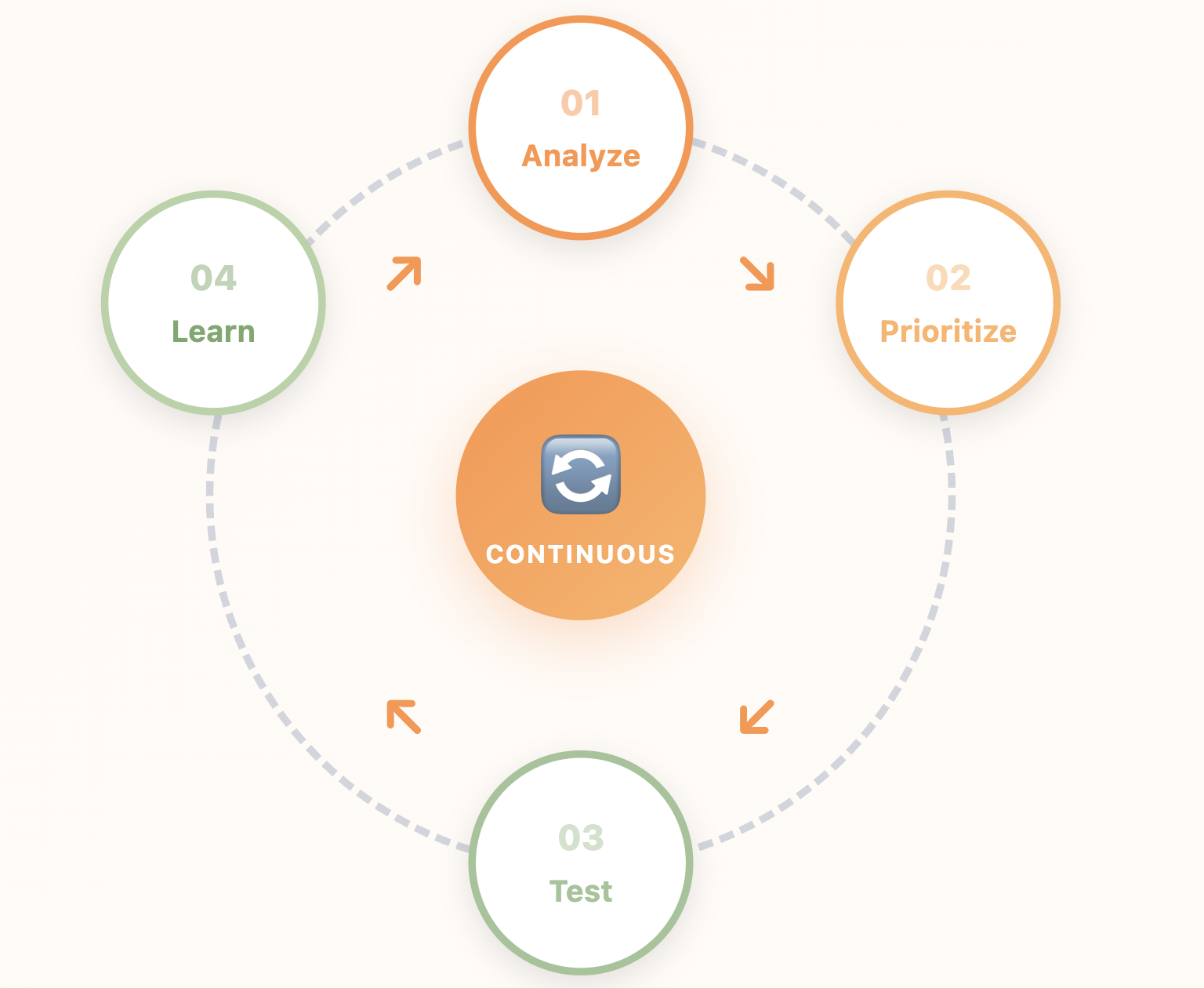
Strategic growth and optimization combines performance analysis, experimentation frameworks, and resource allocation strategy into systematic improvement cycles. Data gets analyzed to identify opportunities and bottlenecks. Tests get prioritized based on potential impact and effort required. Budget flows to highest marginal return opportunities. Creative refreshes happen proactively based on fatigue curves. Every month compounds into better performance because optimization is systematic, not random.
- Cross-channel performance analysis examining how channels work together, not in isolation - understanding that brand awareness campaigns enable performance marketing efficiency, email nurture supports paid conversion rates, organic content feeds retargeting audiences - optimizing for total system performance instead of individual channel metrics
- Experimentation roadmaps and prioritization using impact/effort frameworks to identify which tests matter - testing offer structure before button colors, validating new audience segments before creative variations, proving channel viability before optimization - systematic approach where highest-leverage experiments happen first
- Budget optimization and marginal ROAS analysis calculating incremental return for next dollar spent in each channel - if Meta ads at $15k/month deliver 4.2x but diminishing returns start at $20k, while Google at $8k delivers 3.8x but can scale to $15k profitably - reallocation happens based on math, not politics or inertia
- Channel strategy and expansion planning evaluating when to expand to new platforms, enter new markets, or test new acquisition models - risk-adjusted experimentation where new channels get validated systematically before major investment, not bet-the-company launches based on FOMO
- Conversion funnel and lifecycle optimization identifying drop-off points in customer journey and testing interventions - improving lead-to-consultation booking rate from 18% to 28% has same revenue impact as 50% more ad spend, but costs far less - systematic improvement of conversion mechanics, not just more traffic
- Creative refresh and fatigue monitoring tracking frequency, CTR decay, and CPA inflation to trigger proactive creative updates before performance crashes - new variations launch on schedule based on audience fatigue curves, maintaining efficiency instead of reactive scrambling when campaigns die
- Competitive analysis and market opportunity assessment monitoring competitor positioning, offer structures, creative approaches, and channel strategies to identify gaps and opportunities - informed by market intelligence, not blind copying or ignoring competition entirely
- Executive reporting and strategic recommendations translating data into actionable insights with clear recommendations - not just "here's what happened" but "here's what we should do next and why" - strategic partner that drives decisions, not reporting service that generates dashboards
What systematic optimization unlocks
- Compound growth instead of flat performance: Random optimization produces random results that average out over time. Systematic optimization - prioritizing high-impact changes, learning from every test, applying insights across channels - compounds month over month. The business growing 8-12% monthly instead of 0-5% isn't working harder, they're optimizing smarter with disciplined process.
- Confidence in strategic decisions: Budget reallocation, new channel expansion, offer restructuring - major strategic moves happen with data-backed confidence instead of gut feel anxiety. Risk gets quantified. Upside gets estimated. Decisions are still uncertain, but they're informed by analysis and testing frameworks instead of hope and guesses.
- Break through plateaus that stall competitors: Most businesses hit growth plateaus and don't know why - is it market saturation, creative fatigue, poor product-market fit, wrong channels, inefficient conversion? Systematic analysis identifies the actual constraint. Testing validates solutions. Optimization breaks through ceilings that competitors assume are market limits.
- Strategic capability that scales with you: As the business grows, strategic optimization gets more sophisticated - early stage is basic channel mix and offer testing, growth stage adds audience segmentation and lifecycle optimization, scale stage includes cohort economics and predictive modeling - continuous improvement in both performance and strategic thinking capability.